



What will the ETS2 price be?
Price control mechanisms
During the political debate over the creation of the ETS2, the need for price controls and safeguards was front and centre. As a result, the ETS directive and Market Stability Reserve decision (MSR) already contain several price control mechanisms for ETS2:
- The early auctioning of 30% more emission allowances in the first three years, later deducted from future allowances.
- If the average EUA price for three consecutive months is more than twice the average price for the six months prior, 50 million allowances will be released from the MSR2 – Article 30h(1). Within 2027/2028 the rule is more sensitive and the price must only be 1.5 times higher than the average of the last six months for three consecutive months to trigger the release of the 50 million allowances.
- The average EUA price for three months in a row is more than three times the average EUA price for 6 months before, 150 million allowances will be released from the MSR.
- A soft price cap is in place at an inflation adjusted rate of €45 (likely to be closer to €60 by 2027). If the average EUA price exceeds the price of the soft cap for more than two months, an additional 20 million allowances are released by the MSR2.
- In the case of very high oil or gas prices in mid 2026, the ETS2 will be postponed by one year to 2028.
- Finally, an additional clause also allows the European Commission to respond to high ETS2 prices by issuing an implementing act if a certain low volume of allowances is met twice within a 12 month period.
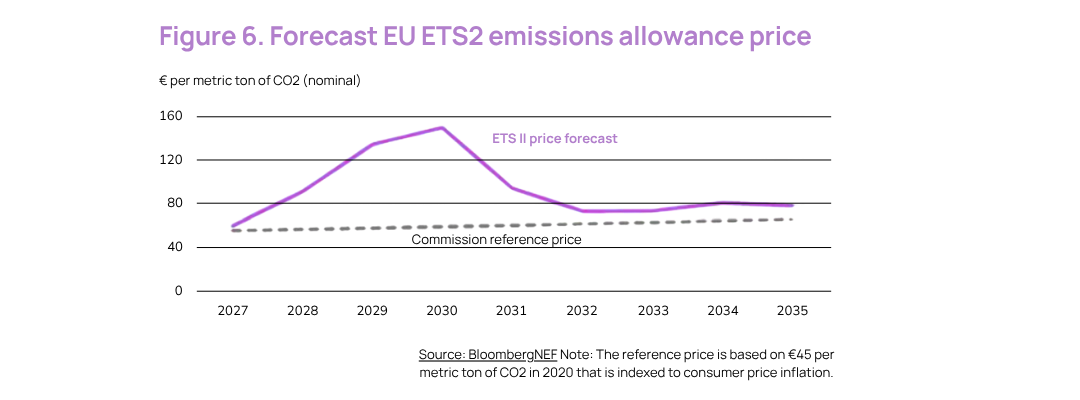
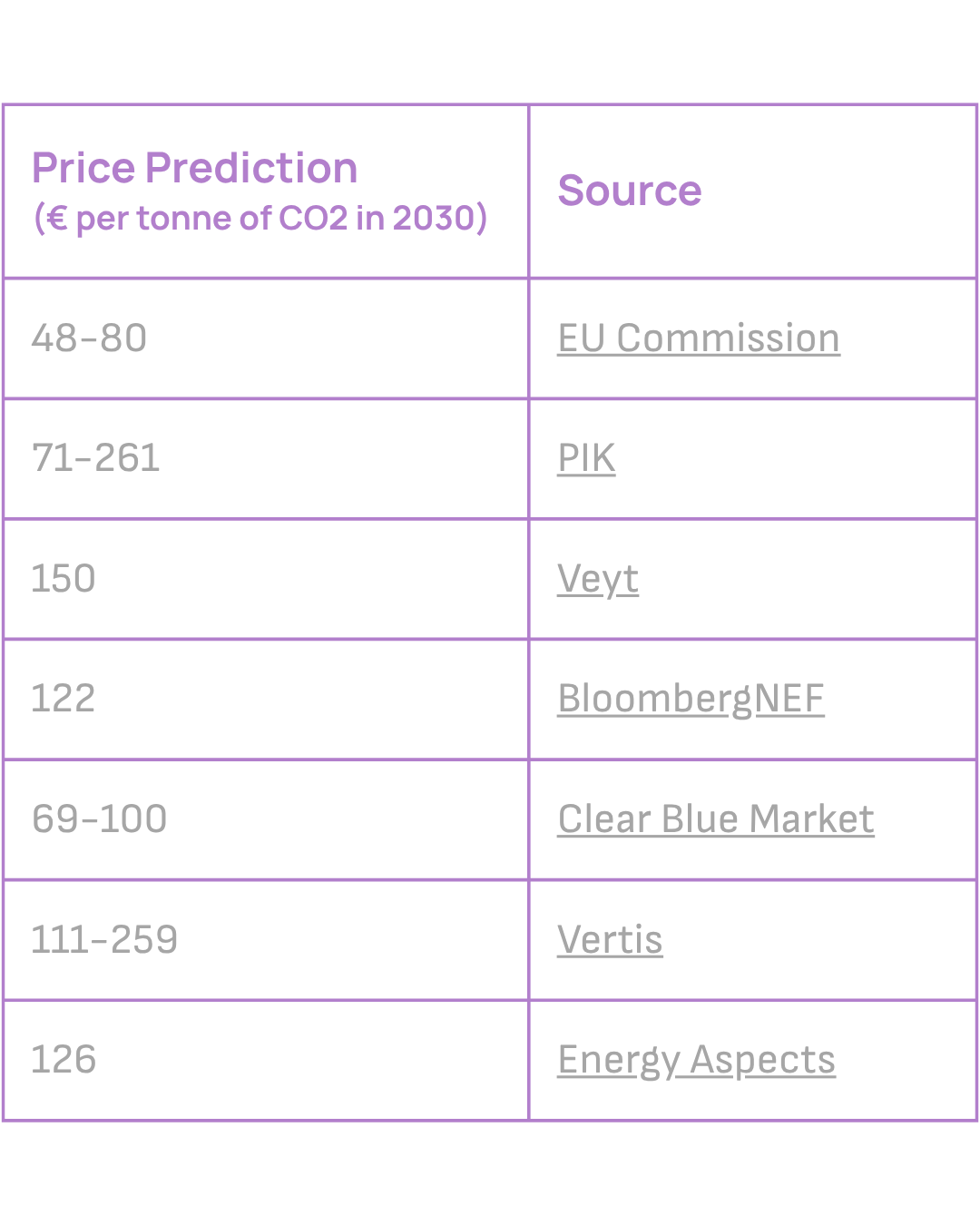
These price controls are in place until 2029 when the European Commission is required to report on their functioning, and could propose to extend and expand price controls following their review, if needed. In 2028, the European Commission must review the functioning of the ETS2 to ensure proper market functioning and stable pricing. This timing is important as many of the models predicting ETS2 prices, including that from BloombergNEF below, show a price increase up to 2030, which can be addressed by this review process in 2028 if needed, depending on the outlook once the market is up and running.
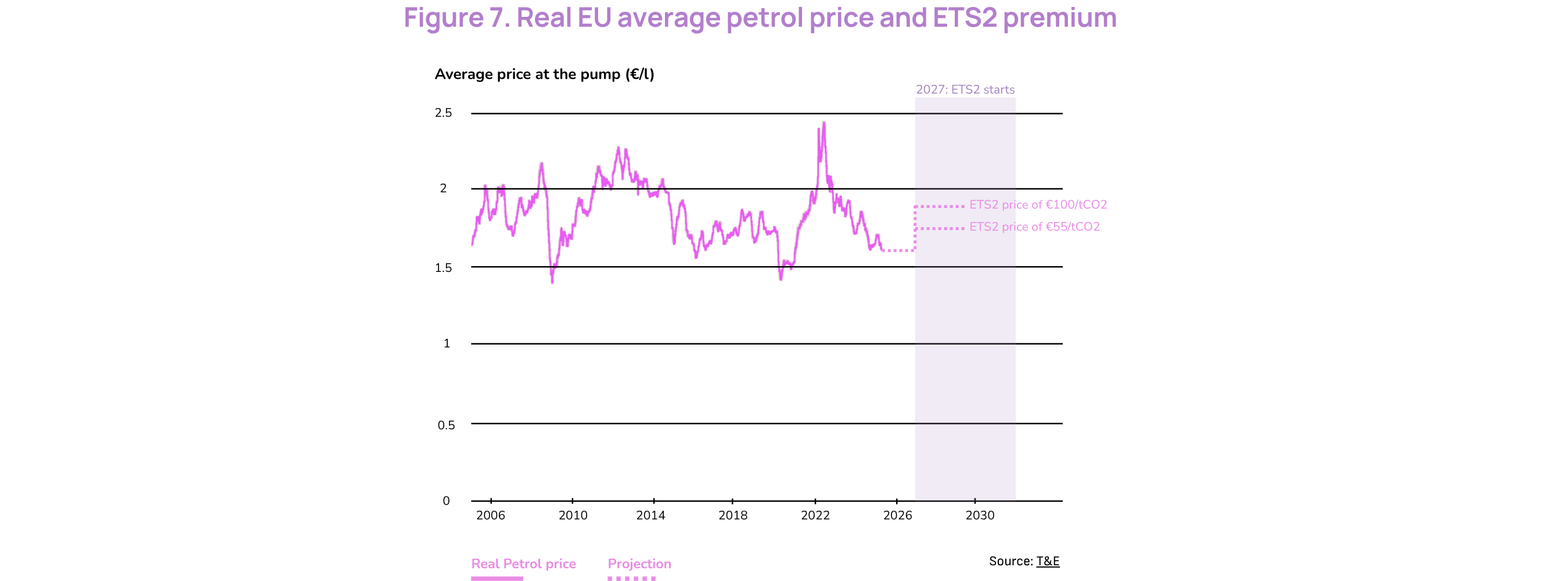
As evidenced by Figure 7 from Transport and Environment the fluctuating price of fossil fuels in recent years remains far higher than the effect of an ETS2 price of €100 per tonne of CO2. This highlights that the real danger and threat to the cost of living is not a carbon price but continued dependency on dirty fuels as fossil fuel companies have proven that they are willing to extract windfall profits. Any attempt to control the price through increasing the supply of allowances means more carbon emissions. In order to meet the European climate targets, any weakening of the ETS2 would need to be matched by increasing ambition in either ETS1 sectors or the remaining ESR sectors; agriculture – which remains politically difficult, or land use sectors where the effectiveness of carbon sinks is already at risk. Ultimately, the most effective way to manage ETS2 price dynamics without undermining ambition is through strong implementation of complementary measures. By reducing emissions in homes and road transport, these measures lower demand for allowances, which in turn helps to moderate ETS2 price while accelerating decarbonisation.