


Öko-Institut’s sectoral experts showcase how far down ETS1 emissions could be driven by 2040 and 2050 across a high and a medium progress scenario.
Event recap: EU ETS at a Crossroads: Trends, Challenges and the Way Forward
The EU Emissions Trading System, which makes companies pay for their CO₂ emissions, has cut emissions in the sectors it covers by about half in twenty years. But in 2025, progress nearly stopped. .
ETS Talk: Carbon pricing (ETS2) and the Social Climate Fund, where do we stand?

May 6, 2026
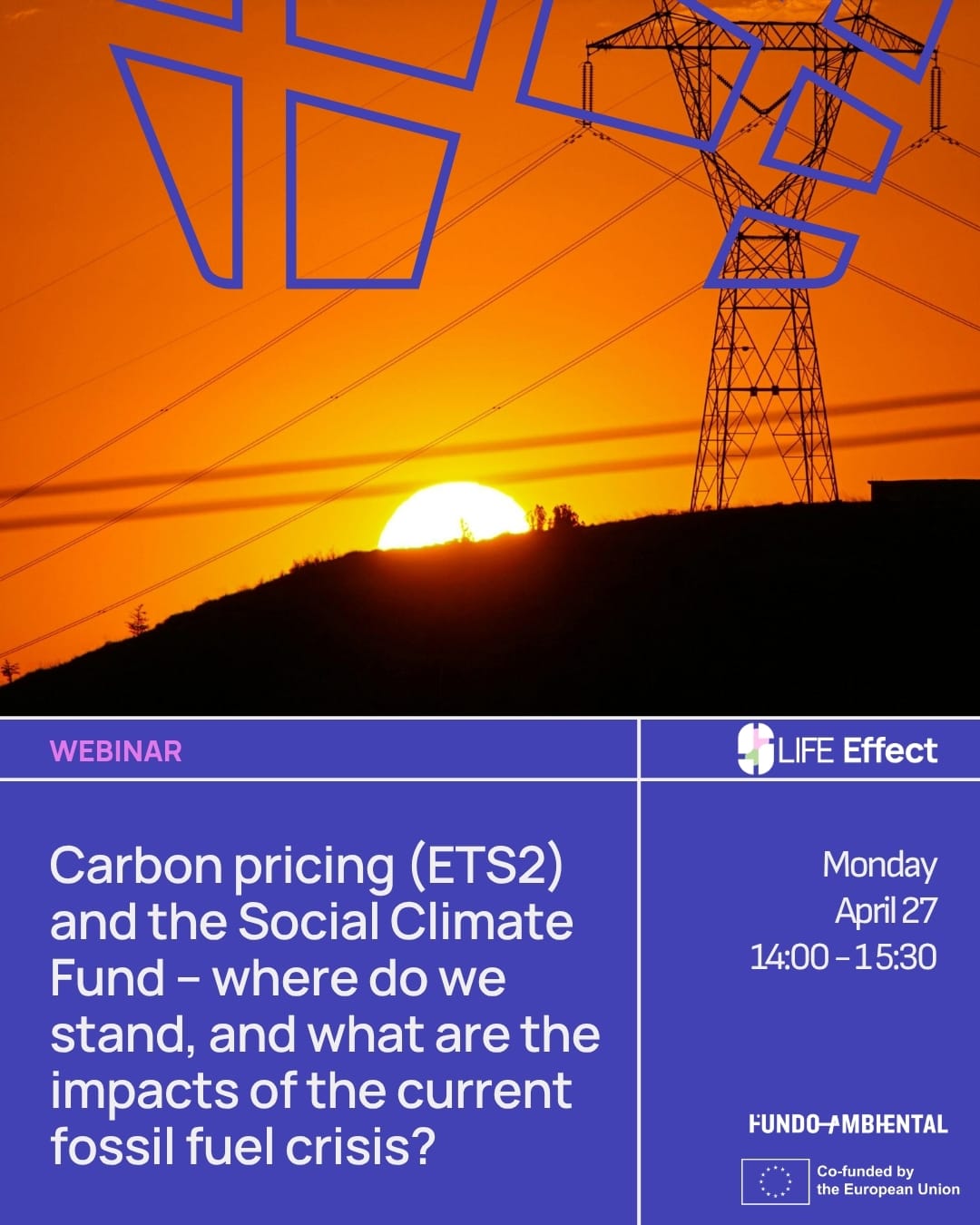
Carbon Pricing (ETS2) and the Social Climate Fund – where do we stand, and what are the impacts of the current fossil fuel crisis?
On 27 April, three experts gathered for the latest ETS Talk to discuss ETS2, the EU’s new carbon pricing system for transport and heating, where we currently stand, and the impacts of the ongoing fossil fuel crisis.
Overview of the National Social Climate Plans
Chris Vrettos (REScoop) opened with an overview of national plans to protect households from ETS2 energy cost increases. Progress is mixed: Poland stands out for strong public consultation and uptake of recommendations, while many countries lag behind. Some promising measures, like energy mentors and one-stop shops are emerging, but no country goes beyond minimum funding.
Energy transition: German case
Dr. Wolf-Peter Schill (DIW Berlin) presented data on heat pumps and EVs in Germany. In 2025, heat pump installations surpassed new gas boilers for the first time, yet nearly half of new heating systems still rely on fossil fuels, and EV uptake has stalled. A key issue is that electricity remains more expensive than gas, making electrification less attractive. Rebalancing energy prices and accelerating electrification are essential. While carbon pricing can help, it is unlikely to drive this shift alone in the short term, additional policies, including regulation and clearer technology direction, are needed.
ETS2 Political landscape
Lea Nesselhauf, advisor to MEP Michael Bloss, gave a frank assessment of the politics. ETS2 has already been delayed by a year, to 2028. Proposed changes to how allowances are managed could push carbon prices down, undermining the system’s effectiveness. Some countries are actively trying to weaken it. But there’s also an opportunity: rising fossil fuel costs are a powerful reminder of why the transition matters, and revenues from ETS2 could be deployed early to help people and accelerate clean investment.
The session concluded with an open discussion on how to ensure the transition is fair, affordable, and sufficiently ambitious to meet Europe’s climate and social objectives.
We look forward to continuing this exchange in our upcoming ETS Talks.
Watch the webinar below