


In the framework of its Annual in-person and hybrid Climate working group the EEB is organising a "ETS2 experts network workshop" taking place on Tue 13th October 2026. In that context, besides updating ourselves on the latest around the ETS2 implementation, we will...
Why the ETS must deliver for people
On 9 September 2026, the LIFE EFFECT project hosted its second Carbon Pricing Hub, a hybrid session entitled “Why the ETS Must Deliver for People.” The discussion focused on the social dimension of the EU Emissions Trading System (ETS), exploring how the upcoming ETS1...
EU ETS at a crossroads: trends, challenges and the way forward
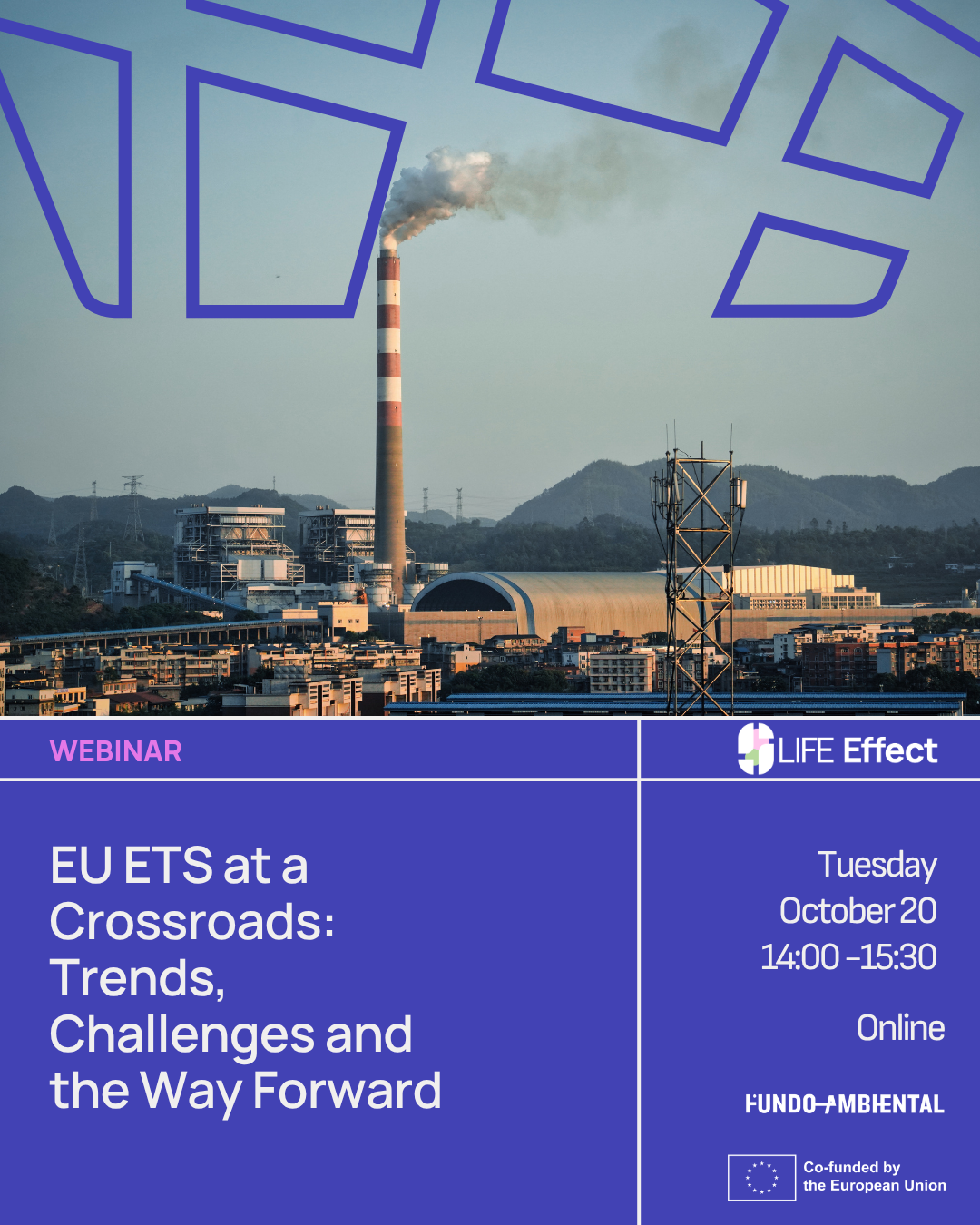

Oct 13, 2026
The EU Emissions Trading System (EU ETS) has been a cornerstone of Europe’s climate policy since 2005, contributing to a substantial reduction in greenhouse gas emissions. But after two decades of progress, the latest data raise important questions about whether emissions are now falling fast enough to meet the EU’s climate targets.
In 2025, emissions from the four main sectors covered by the EU ETS in the EU-27 — power and heat generation, industry, aviation and maritime transport — fell by just 1.7%, reaching 1,137 million tonnes of CO₂. While emissions from power and heat generation and industry were 51.7% below 2005 levels, they remained above the trajectory needed to meet the EU ETS Directive’s 62% reduction target for 2030.
The continued role of fossil fuels in the power sector is particularly striking. Lignite and hard coal generated only 9.2% of EU electricity in 2025, yet accounted for 46% of emissions from power and heat generation. Meanwhile, industrial emissions declined only modestly, aviation emissions plateaued, and maritime emissions fell slightly.
Against this backdrop, the current revision of the EU ETS provides an important opportunity to strengthen the system’s contribution to Europe’s climate and competitiveness objectives. The 7th ETS Talk aims to bring the latest evidence on emissions trends into the policy debate, highlighting where progress has slowed and where changes are needed to ensure faster and more consistent emissions reductions. The event will engage EU policymakers and other key stakeholders in discussing how the next phase of the ETS can build on what has worked while addressing remaining gaps, particularly around fossil fuel use, industrial decarbonisation and competitiveness.
The discussion will be based on The Green Tank’s report, “Trends in the Emissions Trading System in the EU & Greece, 2005–2025,” which examines emissions trends across power and heat generation, industry, aviation and maritime transport.
Agenda
14:00–14:05 – Introduction
14:05–14:20 – Presentation: EU ETS 2005–2025 — Progress, Gaps and Emerging Trends – Nikos Mantzaris , Green Tank
14:20–14:30 – The EU ETS and Industrial Decarbonisation – Boris Jankowiak, CAN Europe
14:30–14:55 – Discussion
14:55–15:00 – Closing